
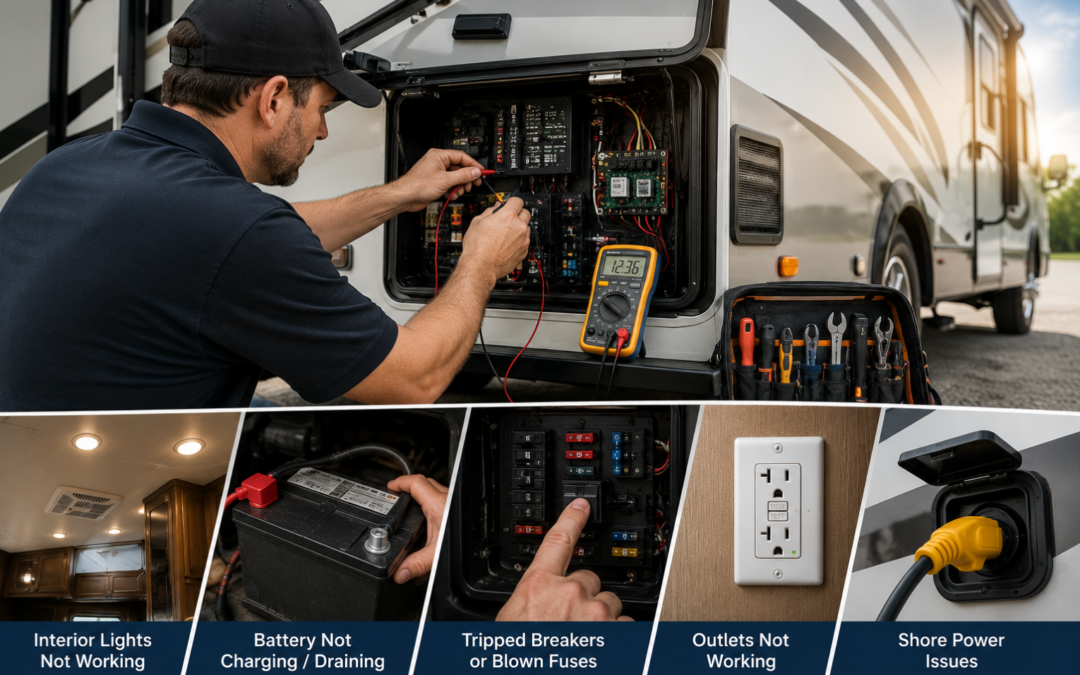
Troubleshooting Batteries, Converters, Shore Power, and More
RV electrical problems can be frustrating, especially when you're preparing for a trip, setting up at a campground, or settling in for a weekend getaway. You plug into shore power, turn on the lights, and suddenly something isn't working. Maybe the outlets are dead, the batteries aren't charging, the air conditioner won't start, or half the RV seems to have lost power.
The good news is that not every RV electrical problem requires a service appointment. Some issues are surprisingly simple and can be resolved in just a few minutes with a little basic troubleshooting. A tripped GFCI outlet, a switched-off battery disconnect, or a campground electrical pedestal problem can sometimes look like a much bigger repair than it really is.
However, RV electrical systems can also be complicated. Modern motorhomes, fifth wheels, and travel trailers use multiple electrical systems that work together, including 12-volt DC power and 120-volt AC power. Batteries, converters, inverters, transfer switches, circuit breakers, and campground connections all play a role.
Understanding a few basic troubleshooting steps can save you time and frustration. More importantly, knowing when to stop troubleshooting and call a qualified RV technician can protect you, your family, and your RV from electrical damage or injury.
Whether you're camping in the mountains of Western North Carolina or staying closer to home in Upstate South Carolina, here's what every RV owner should know about common RV electrical problems.
Safety First
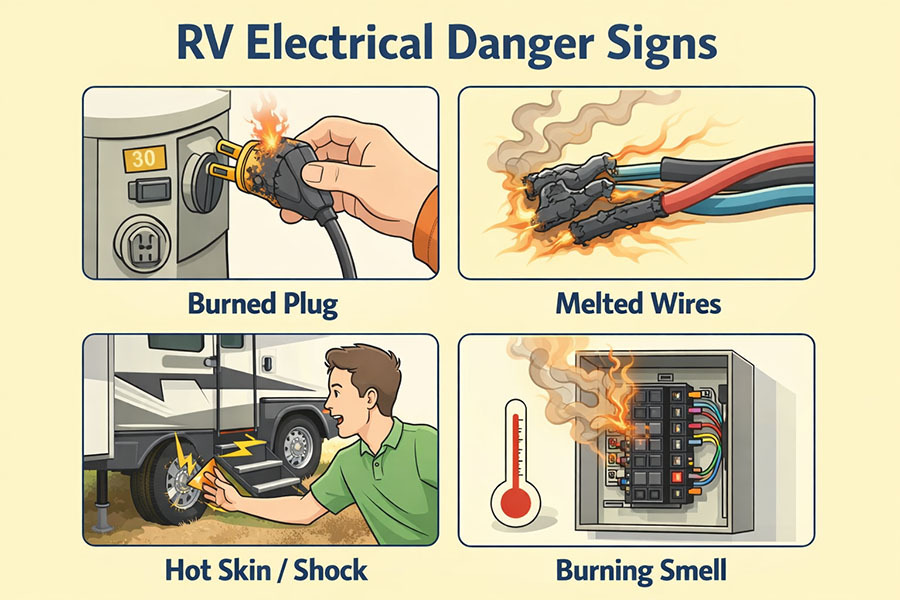
First, it is important to know some of the most common electrical danger signs. This is not a comprehensive list, just a diagram of the most common and dangerous signs. If you encounter any of these issues, stop and call a RV professional. Do not return to your RV until the problem is fixed.
Understanding Your RV's Two Electrical Systems
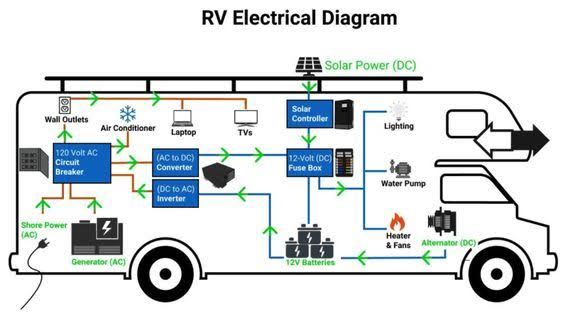
Before troubleshooting an electrical problem, it helps to understand that most RVs have two primary electrical systems.
12-Volt DC Power
Your RV's 12-volt DC system typically runs on battery power. It supplies electricity to many of the components you use every day, including:
- Interior lights
- Water pump
- Furnace blower
- Refrigerator controls and electronics
- Control boards and thermostats
- Some entertainment and monitoring equipment
- Certain USB charging outlets
Your house batteries supply this power. When your RV is connected to shore power, a converter generally changes incoming 120-volt AC electricity into 12-volt DC electricity to operate DC components and recharge the batteries.
120-Volt AC Power
Your RV's 120-volt AC system operates much like the electrical system in a house. It supplies power to appliances and outlets that require household-style electricity.
Common examples include:
- Microwave
- Residential refrigerator
- Air conditioner
- Television and standard electrical outlets
- Coffee makers and other household appliances
- Certain electric water heaters
This power normally comes from a campground electrical pedestal, a generator, or an inverter when the RV is equipped and configured to provide AC power from its batteries.
Why does this distinction matter?
Because a problem with one electrical system doesn't necessarily mean there's a problem with the other.
For example, your interior lights may work perfectly while your microwave and electrical outlets have no power. Alternatively, your outlets might work when connected to shore power while your 12-volt lights and water pump stop working because of a battery or DC distribution problem.
Understanding which system is affected is the first step toward finding the problem.
1. RV Outlets Suddenly Stop Working? Check Your GFCI First!
This is one of the simplest electrical problems RV owners encounter, and it's also one of the most common reasons someone might think they need an electrical repair.
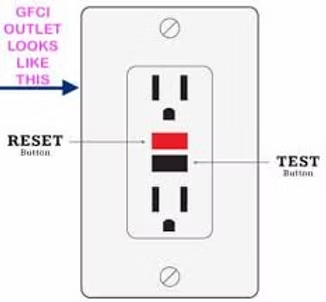
If some of your electrical outlets suddenly stop working, there's a good chance a GFCI outlet has tripped.
A GFCI (Ground Fault Circuit Interrupter) is a special electrical outlet designed to protect you from electrical shock. It monitors electrical current and shuts off power when it detects an imbalance that could indicate electricity is taking an unintended path.
You'll commonly find GFCI outlets in RV bathrooms, kitchens, and other areas where electricity and moisture may come into contact.
The interesting thing is that one GFCI outlet can protect several other outlets downstream from it. That means a tripped GFCI in your bathroom could potentially cause an outlet in your kitchen or another part of the RV to stop working.
How to Reset an RV GFCI Outlet
If your RV outlets aren't working, try this before scheduling a repair:
- Locate the GFCI outlet. Start in the bathroom and kitchen.
- Look for the buttons labeled TEST and RESET.
- Press the RESET button firmly.
- Check whether the other outlets have power again.
- If it won't reset, unplug appliances from the affected outlets and try again.
If the outlet resets and everything works, you may have solved the problem without needing a service call.
What If the GFCI Keeps Tripping?
A GFCI that repeatedly trips is telling you something. There could be a problem with an appliance, moisture in an outlet, damaged wiring, or another electrical fault.
Unplugging appliances may help identify whether a particular device is causing the problem. However, don't continue resetting a GFCI that repeatedly trips without identifying the cause.
Never bypass a GFCI or replace it with an ordinary outlet to keep the power on.
If it continues tripping, have an RV technician investigate.
A quick tip: If only some of your RV outlets are dead, but the lights and other electrical components work, check the GFCI before assuming you have a major electrical problem.
2. Is It Your RV or the Campground Electrical Pedestal?
Here's another situation that can cause unnecessary frustration: You arrive at a campground, plug in your RV, and suddenly you have no power.
Before assuming something is wrong with your RV, consider the possibility that the campground's electrical pedestal is the problem.
Campground electrical pedestals provide the shore power connection for your RV. Depending on your coach, you may have a 30-amp or 50-amp connection.
Problems can occur with the pedestal breaker, receptacle, wiring, or power supply.
How to Tell If the Campground Power Is the Problem
There are a few things you can safely check without opening anything or working with exposed electrical connections.
1. Check the campground pedestal breaker.
Look at the breaker supplying your RV connection. If it is visibly in the OFF position, contact campground management or ask permission before resetting it.
Never repeatedly reset a breaker that trips again.
2. Ask whether neighboring campers have power.
If other campers are experiencing the same problem, there's a good chance the issue is related to the campground's electrical supply rather than your RV.
This isn't a guarantee, but it's a useful clue.
3. Ask campground management to inspect the pedestal.
A campground employee or qualified electrician can check whether the pedestal is supplying power correctly.
A damaged receptacle, improperly wired connection, or inadequate electrical supply can cause problems that appear to originate inside your RV.
4. Consider whether your RV has experienced the same problem elsewhere.
If your RV was working properly at the previous campground but suddenly has no power at the new location, the pedestal deserves attention.
If the problem follows your RV to multiple locations, the issue is more likely to be within your coach or its power cord and electrical equipment.
What About Using an Electrical Tester?
Some RV owners carry an electrical management system (EMS) or surge protector that monitors incoming campground power.
These devices can identify certain dangerous electrical conditions, including low voltage, high voltage, and wiring problems, depending on the model.
They are particularly useful because campground electrical connections aren't always in perfect condition.
A properly rated RV electrical management system can help protect your equipment from unsafe incoming power.
However, don't attempt to diagnose a campground pedestal by probing its electrical receptacle with a screwdriver, multimeter, or other exposed testing equipment unless you're qualified to perform that work.
A 30-amp RV connection can deliver dangerous electrical current, and a 50-amp connection has two separate 120-volt legs. Incorrect wiring or a faulty connection can damage appliances and create a serious shock or fire hazard.
If you suspect the pedestal is faulty, stop using it and have campground management investigate.
3. RV Batteries Not Holding a Charge?
A dead or weak RV battery can create all sorts of confusing symptoms.
You might notice dim interior lights, a water pump that struggles to operate, control panels that shut down, or a furnace that won't run properly.
Cold weather can make the situation worse because battery performance decreases as temperatures drop. This is particularly relevant for RV owners camping or storing their units in Western North Carolina, where winter temperatures can be considerably colder than those experienced in much of the South Carolina Upstate.
Start With These Simple Checks
Before assuming the battery needs replacement, check a few things.
Check the battery disconnect switch.
Many RVs have a battery disconnect switch that isolates the house batteries from some or most of the RV's DC electrical system.
If the switch is off, certain components may not receive battery power.
Depending on the RV's design, some circuits may remain connected even when the disconnect is switched off.
Check the battery terminals visually.
Look for obvious corrosion, damaged cables, or loose-looking connections.
Do not touch exposed wiring or attempt to tighten connections while the system is energized. Battery cables can carry substantial current, and an accidental short can cause burns, sparks, or fire.
Check whether the batteries are actually charging.
If your RV is plugged into shore power but the batteries aren't charging, the problem could involve the converter, battery connections, charging system, or battery itself.
A battery that repeatedly loses its charge may also have a parasitic draw. This happens when an electrical component continues consuming power even when the RV appears to be turned off.
Common sources can include monitoring systems, detectors, entertainment equipment, control boards, and other electronics.
A Note About Battery Voltage
For owners who want to learn more about their batteries, a basic battery monitor can provide useful information.
A fully charged conventional 12-volt lead-acid battery typically measures around 12.6–12.8 volts after resting with no charging or significant load. The actual reading varies with battery chemistry, temperature, and battery condition.
Lithium batteries have different voltage characteristics, so the same measurements and assumptions don't apply.
Voltage alone also doesn't tell you the battery's actual capacity or health.
A battery can show a seemingly normal voltage but fail when an appliance places it under load.
If your batteries repeatedly die, won't accept a charge, or cause electrical components to behave unpredictably, professional testing can help determine whether you have a bad battery, charging problem, or excessive electrical draw.
4. Your RV Is Plugged In, but the Batteries Aren't Charging
This is one of those problems that can leave RV owners scratching their heads.
Everything appears normal. The RV is plugged into shore power, the outlets work, and the microwave runs. But the battery monitor shows that the house batteries aren't charging.
What's going on?
Your RV's converter is an important part of the electrical system. It converts incoming 120-volt AC electricity into 12-volt DC power.
That allows the RV to operate its 12-volt components while also charging the house batteries, depending on the converter and charging system configuration.
If the converter stops working properly, you may experience:
- Batteries that gradually lose their charge while plugged in.
- Interior lights that become dim.
- A water pump that runs slowly.
- Battery voltage that continues dropping.
- Electrical components that stop functioning after the batteries discharge.
What Can You Check Yourself?
Start with the basics:
- Confirm that the campground pedestal is supplying power.
- Check whether the RV's main AC breaker is on.
- Check the breaker supplying the converter, if it is clearly identified.
- Look at your battery monitor to see whether the charging status changes when shore power is connected.
- Check your RV owner's manual for information about your particular converter and charging system.
Some RVs have separate charging systems, battery management systems, or inverter/charger combinations. Their operation can differ considerably.
If the outlets work but the batteries aren't charging, don't assume the converter is automatically bad.
The issue could be a breaker, wiring connection, battery disconnect, charging fuse, converter, or battery management system.
A qualified technician can test the charging circuit and determine where power is being lost.
Important: Never remove an electrical panel cover or attempt to test live converter connections unless you have the proper electrical training and equipment. The converter and associated wiring can expose you to hazardous AC voltage.
5. RV Circuit Breakers Keep Tripping
Have you ever turned on the microwave while the air conditioner was running, only to have the power suddenly shut off?
You may have overloaded a circuit.
RVs have limited electrical capacity compared with most residential homes. Depending on the RV's electrical service, running several high-demand appliances simultaneously can exceed the available capacity.
For example, an air conditioner, microwave, electric water heater, and coffee maker can collectively draw more electricity than a particular circuit or available shore power connection can supply.
What Should You Do?
First, turn off some appliances and reduce the electrical load.
If a breaker trips, turn it fully to the OFF position before switching it back ON, provided there are no signs of damage or other hazards.
Try operating fewer appliances simultaneously.
If the breaker stays on, you may have simply exceeded the available electrical capacity.
However, if the same breaker repeatedly trips when only one appliance is operating, something else may be wrong.
Possible causes include:
- A failing appliance.
- Damaged wiring.
- A short circuit.
- A defective breaker.
- A loose or overheated electrical connection.
- Moisture or damage within an electrical component.
Never install a larger breaker to stop a circuit from tripping. Breakers are sized to protect the wiring, and increasing their rating without properly engineering the circuit can create a fire hazard.
Repeated breaker trips deserve professional attention.
6. RV Electrical Outlets or Appliances Work Intermittently
Electrical problems that come and go can be particularly difficult to diagnose.
Maybe the microwave works sometimes but not others. Perhaps certain outlets stop working when another appliance is turned on, or the air conditioner occasionally shuts down.
Intermittent electrical problems can be caused by several things.
Common possibilities include:
- Loose electrical connections.
- Damaged shore power cords.
- Worn or damaged receptacles.
- Failing transfer switches.
- Voltage fluctuations.
- Faulty breakers.
- Overloaded circuits.
- Damaged wiring or electrical components.
One important thing to understand is that low voltage can be just as problematic as excessive voltage.
When campground voltage drops under heavy demand, certain appliances may struggle to operate. Air conditioners, in particular, can be sensitive to inadequate voltage.
Repeated low-voltage operation can damage equipment.
If your air conditioner struggles to start, lights dim significantly when appliances operate, or electrical components behave unpredictably, don't assume it's simply an RV quirk.
An RV technician can test the incoming power, inspect connections, and diagnose the electrical system.
If you notice burning smells, buzzing, visible arcing, melted plugs, or unusually hot electrical connections, disconnect power only if you can do so safely. Do not touch damaged electrical equipment. Keep away and get qualified assistance.
7. Inverter Problems: Why Your Outlets May Work Sometimes but Not Others
An inverter allows certain RV electrical systems to operate using battery power instead of relying exclusively on campground shore power or a generator.
Depending on how your RV is equipped, an inverter may supply 120-volt AC power to selected outlets or appliances.
This can be particularly useful when camping without electrical hookups.
However, inverter-related problems can be confusing because not every outlet or appliance is necessarily connected to the inverter.
For example, you might have power to your television and selected outlets while the microwave or air conditioner remains unavailable.
That may be completely normal for your particular RV configuration.
A Few Things to Check
- Is the inverter switched on?
- Is the battery bank sufficiently charged?
- Does your RV have an inverter that supplies the outlets you're trying to use?
- Does the inverter display an error or fault code?
- Has the inverter's reset or protection system activated?
Check your owner's manual before attempting a reset.
An inverter fault can indicate low battery voltage, overload, overheating, or an internal electrical problem.
If the inverter repeatedly shuts down or displays an error, it's time to have the system diagnosed.
Inverter systems can involve substantial battery current and potentially dangerous AC voltage. Avoid opening the equipment or attempting internal repairs.
When Should You Stop Troubleshooting and Call an RV Technician?
There is nothing wrong with learning about your RV and handling simple maintenance tasks yourself.
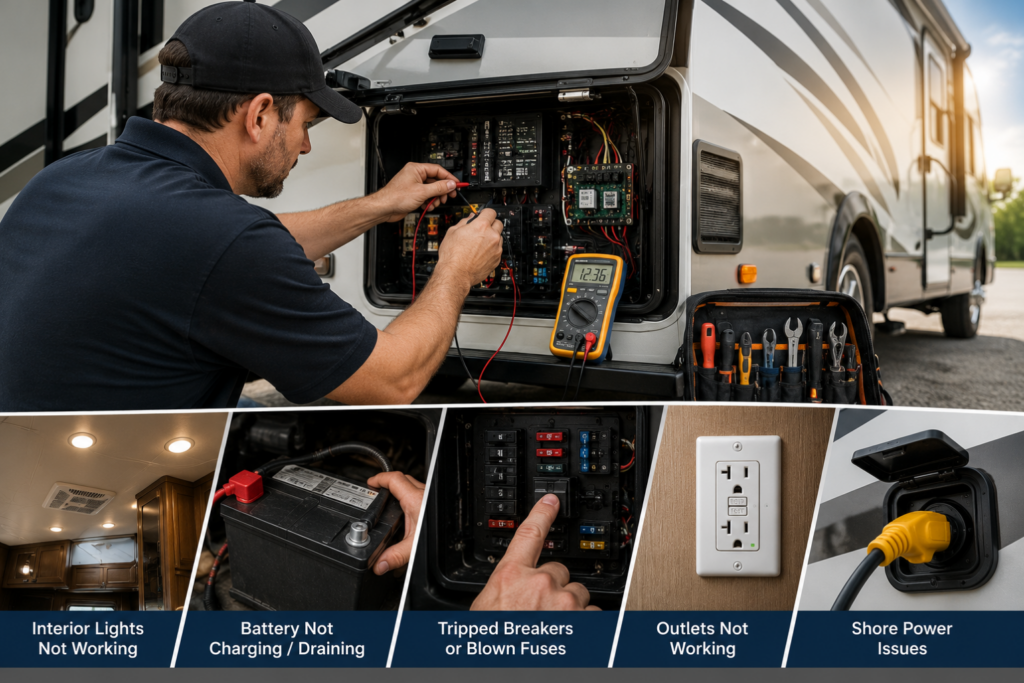
In fact, every RV owner should know where the GFCI outlets are, how to check the battery disconnect, and how to identify a tripped circuit breaker.
But electrical troubleshooting has limitations.
A problem that appears simple on the surface may actually involve a damaged wire, failing component, or unsafe electrical connection.
Here are some situations where professional RV electrical repair is the better choice:
- A breaker repeatedly trips after being reset.
- A GFCI outlet repeatedly trips without an obvious appliance-related cause.
- You smell burning plastic or electrical insulation.
- An outlet, plug, or electrical connection becomes unusually hot.
- You see melted wiring, discoloration, or visible electrical damage.
- Batteries won't charge despite confirmed shore power.
- Your converter or inverter repeatedly displays fault codes.
- You experience intermittent electrical failures that you can't isolate.
- You suspect a transfer switch, electrical panel, or internal wiring problem.
- You experience electrical shocks or tingling when touching your RV.
Never work on energized electrical systems.
Even when an RV is unplugged from shore power, its batteries can still supply substantial current. Inverters may also contain stored electrical energy after being disconnected.
A qualified RV technician has the tools and experience to test electrical circuits, identify faulty components, evaluate connections, and make repairs safely.
Knowing when to stop is just as important as knowing what to check.
Preventing RV Electrical Problems Before They Happen
A little preventative maintenance can help avoid many common RV electrical issues.
Consider adding these items to your regular RV maintenance routine:
Inspect your shore power cord. Look for cuts, damaged insulation, bent prongs, discoloration, or signs of overheating. Replace damaged equipment rather than attempting makeshift repairs.
Keep battery connections in good condition. Have battery terminals and connections inspected periodically. Corrosion and loose connections can interfere with charging and electrical performance.
Monitor battery condition. Don't wait until your batteries are completely dead to investigate a charging problem. Periodically check battery condition and charging performance.
Use appropriate electrical protection. A properly rated RV electrical management system can help identify unsafe campground power conditions and protect compatible equipment.
Avoid overloading circuits. Understand your RV's electrical capacity and be mindful of how many high-demand appliances you're running simultaneously.
Inspect electrical equipment before traveling. Look for visible damage to cords, plugs, receptacles, and accessible wiring.
Have recurring problems diagnosed. Electrical issues that come and go shouldn't be ignored. A small connection problem can become a much more expensive repair if left unresolved.
Regular inspections and maintenance can help identify problems before they interrupt your next trip.
Need RV Electrical Repair in North Carolina or South Carolina?
Sometimes a simple reset is all it takes to get your RV back up and running. Other times, the problem requires proper electrical testing and professional diagnosis.
At VLRV Services, we understand how frustrating electrical problems can be, especially when you're traveling or preparing for your next adventure. Our mobile RV technicians help RV owners diagnose and repair problems so they can get back to enjoying their RVs.
Whether you're dealing with a battery that won't charge, a faulty converter, inverter problems, shore power issues, or another electrical concern, getting the problem properly diagnosed is important.
VLRV Services provides mobile RV repair and maintenance throughout our service areas, including:
- Arden, Asheville, and Western North Carolina: Mobile RV Repair Near Arden, NC
- Inman, Spartanburg, and the surrounding Upstate: Mobile RV Repair Near Inman, SC
- Taylors, Greenville, Greer, and surrounding communities: Mobile RV Repair Near Taylors, SC
Visit our RV Services page to learn more about how VLRV can help with your RV maintenance and repair needs.
Not sure whether your electrical problem requires a service call? Don't be afraid to ask questions. Sometimes the first step is simply identifying whether the problem is with your RV, the campground power supply, or a component that needs professional attention.
Call VLRV Services at (864) 301-4200 to discuss your RV electrical concerns and get help determining the next step.
A little troubleshooting can save you a service call. And when the problem is more complicated, having an experienced RV technician diagnose it correctly can save you considerably more.